Mail

ardsihyd@gmail.com

Help Line (10:30 am - 5:00 pm IST, Mon - Sat)

+91 91211 06681

Alzheimer’s and Related Disorders Society of India – Hyderabad Deccan Chapter (NGO)

Risk Factors and Prevention

Key Dementia Risk Factors and What Helps

Brain health is influenced by many aspects of daily life. Factors known to affect dementia risk — can often be addressed with the right support.

Never too Early.Never too Late

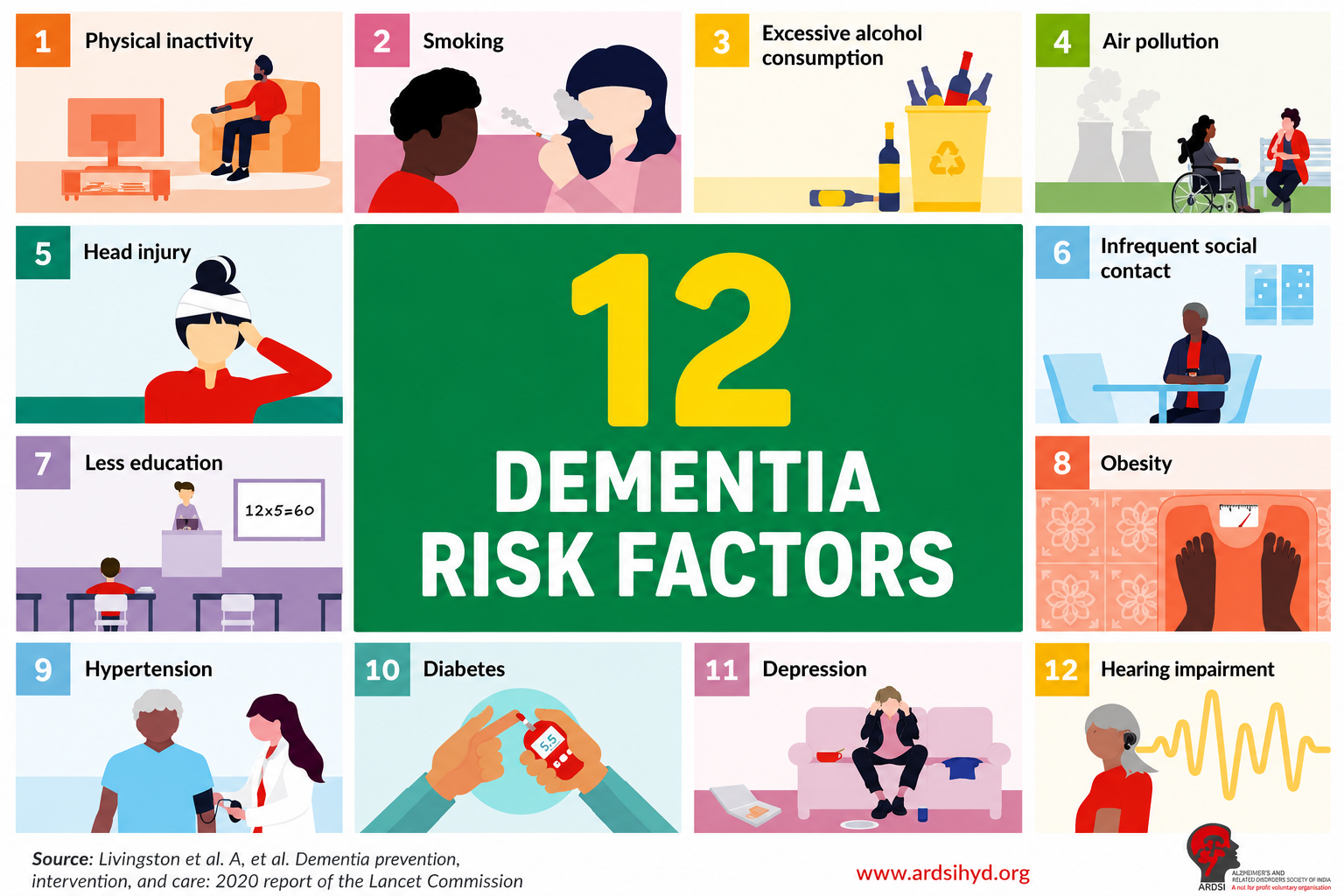
Most cases of dementia are caused by a mixture of risk factors. A risk factor is something that affects our chances of developing a condition like dementia. Some of the risk factors we can’t change. However, research suggests that almost 45% of dementia cases are linked to risk factors we have some control of. This means that we can reduce our risk of getting it by taking steps to protect our brain health.
Risk factors we can’t control – non-modifiable risk factors
AGEING
Dementia is not because of ageing on its own but due to a combination of some age-related changes to the brain and other risk factors that contribute to our overall developing of dementia
These include:
Being more likely to develop high blood pressure.
Damage to blood vessels in the brain because of high cholesterol /diabetes.
Higher risk of stroke.
Weaker immune system and taking longer to recover from illnesses.
GENDER
Women are at a higher risk of developing dementia due to factors like:
Differences in life expectancy – Women tend to live longer than men and as dementia becomes more common as we age, there are more older women alive to develop dementia.
Social isolation, depression and loneliness, seen more in women, have been linked to a higher risk of dementia.
Pre-existing conditions like high blood pressure that are risk for developing dementia, are more prevalent in women.
Lower levels of physical activity in mid-life, more commonly seen in women.
Lack of opportunity for women in education and work which can lead to higher levels of social deprivation, lower cognitive reserve, and less access to medical care to treat underlying conditions that contribute to the development of dementia.

GENES
The DNA code in our genes naturally varies from person to person. Often this variation has no effect on us but sometimes, the DNA code can contain differences that slightly alter the protein made by a particular gene, causing to work differently. This can lead to changes in processes in our cells, which may increase our likelihood of developing a disease.
Most people’s risk of developing dementia is a combination of genes, lifestyle, environment and age. Rare types of Alzheimer’s disease and some cases of Fronto Temporal dementia can be caused by faulty genes and are passed down from an affected parent. Someone who carries one of these rare mutations is extremely likely to develop the disease during their lifetime. Around one in 100 cases of dementia are caused by inherited faulty genes.
ETHINICITY
Some ethnicities are at a higher risk of developing conditions like high blood pressure and diabetes. These conditions increase the risk of dementia.
Certain populations may be more likely to live in deprived neighborhoods. These often create barriers to education, housing, healthcare, employment and higher levels of pollution. These may increase dementia risk.

Risk Factors for Dementia we can Control

Almost half of dementia cases are linked to risk factors that we can control. These are called modifiable risk factors. This means that there are things we can do to protect the health of our brains and so reduce our risk of getting dementia. Research has found this is particularly important in our mid-life (aged 40-65). Some research studies have found that people with healthier lifestyles are less likely to develop dementia and in cases where they did get dementia, these people experience a slower decline of symptoms.

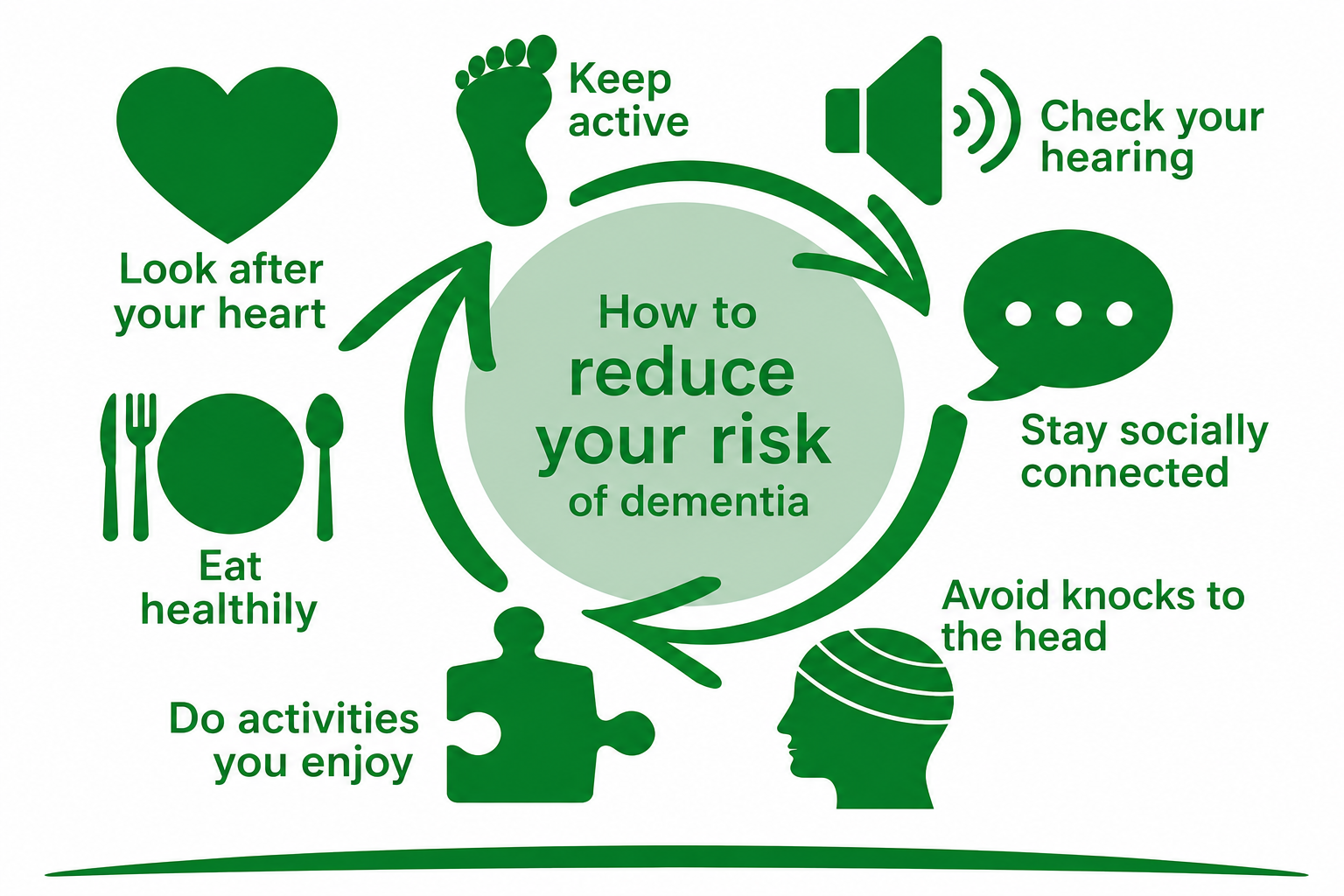
REDUCE THE RISK OF DEVELOPING DEMENTIA

As we get older, our risk of developing dementia increases. But evidence shows there are things you can do to help reduce this risk. These include keeping active, eating healthy and staying mentally active and social.