Mail

ardsihyd@gmail.com

Help Line (10:30 am - 5:00 pm IST, Mon - Sat)

+91 91211 06681

Alzheimer’s and Related Disorders Society of India – Hyderabad Deccan Chapter (NGO)

Testing & Diagnosis

Dementia Testing & Diagnosis Process

Clear. Compassionate. Evidence-based.
We follow a structured, step-by-step approach that respects the person, supports the family, and leads to meaningful care decisions.

Why Early Dementia Testing Matters

Families often come to us saying:

These experiences are common — and they often lead to delays in care, unnecessary distress, and missed opportunities for support.

Who Should Get Tested?

Dementia testing is recommended if a person shows:

  • Persistent memory loss affecting daily life
  • Difficulty with language, decision-making, or familiar tasks
  • Personality or behaviour changes
  • Confusion about time, place, or people
  • Decline noticed by family members or caregivers

You do not need to wait for symptoms to become severe.
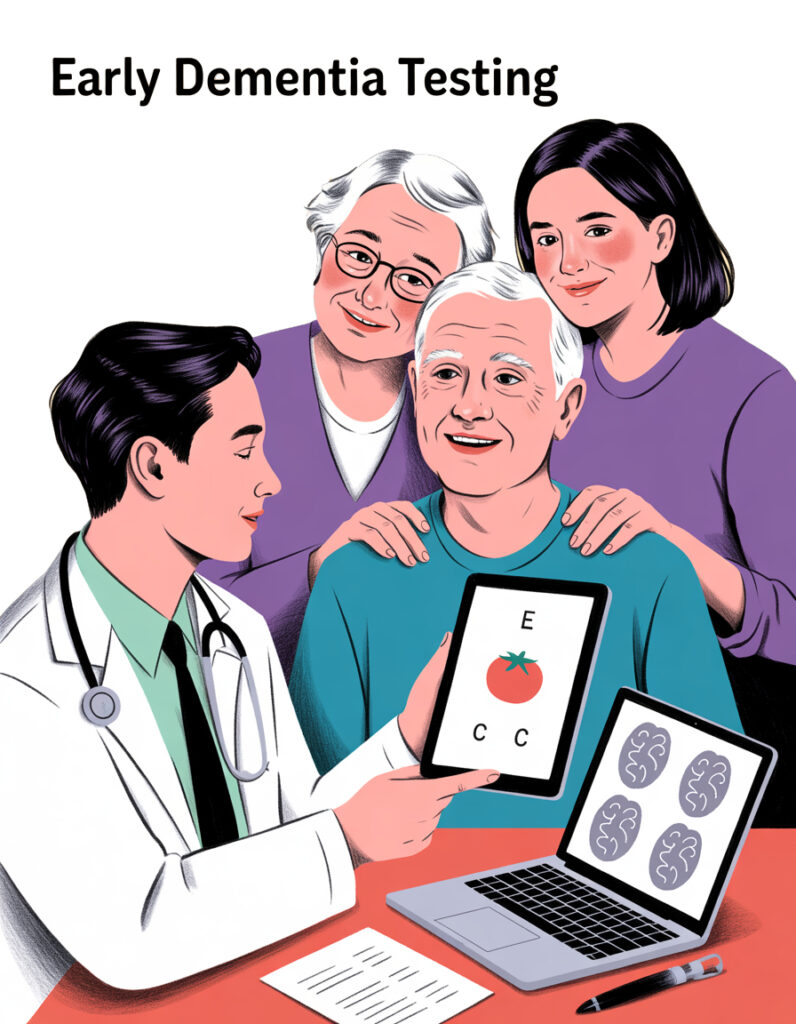
Early and proper dementia testing helps to:

Distinguish dementia from normal ageing, depression, or stress
 
Ensuring people receive the right diagnosis — and the right care.
 
Identify reversible or treatable causes of memory problems
 
Such as vitamin deficiencies, medication effects, or thyroid conditions.
 
Allow families to plan, adapt, and care better
 
Giving time to understand changes, organise support, and make informed decisions.
 
Reduce unnecessary medication, stigma, and fear
 
Replacing confusion and blame with clarity and understanding.
 
Help people living with dementia retain independence for longer
 
Through timely interventions, routines, and appropriate support.
 
Early testing doesn’t just change outcomes.
 
It changes lives — for the person, their family, and the community around them.

Why Early Dementia Testing Matters

Families often come to us saying:

These experiences are common — and they often lead to delays in care, unnecessary distress, and missed opportunities for support.

Early and proper dementia testing helps to:

Distinguish dementia from normal ageing, depression, or stress
Ensuring people receive the right diagnosis — and the right care.
 
Identify reversible or treatable causes of memory problems
Such as vitamin deficiencies, medication effects, or thyroid conditions.
 
Allow families to plan, adapt, and care better
Giving time to understand changes, organise support, and make informed decisions.
 
Reduce unnecessary medication, stigma, and fear
Replacing confusion and blame with clarity and understanding.
 
Help people living with dementia retain independence for longer
Through timely interventions, routines, and appropriate support.
 
Early testing doesn’t just change outcomes.
It changes lives — for the person, their family, and the community around them.

Who Should Get Tested?

Dementia testing is recommended if a person shows:

  • Persistent memory loss affecting daily life
  • Difficulty with language, decision-making, or familiar tasks
  • Personality or behaviour changes
  • Confusion about time, place, or people
  • Decline noticed by family members or caregivers

You do not need to wait for symptoms to become severe.

Steps in Dementia testing

Scientific. Humane. Culturally sensitive.
We follow a step-by-step diagnostic process, adapted to cultural realities—language, literacy levels, family involvement, and access barriers.
Step 1

Pre-clinical Discussion

We start by listening.
What we cover:
  • Medical history and current health conditions
  • Memory, attention, and daily life concerns
  • Family observations and lived experiences
  • Medication review, if available
Why it matters: Families often notice changes long before tests do. This step helps us understand the whole person, not just symptoms.
Step 2

Cognitive Evaluation

Respectful testing
We use validated cognitive tests tailored to:
  • Local languages
  • Low literacy or no formal education
  • Cultural context
These tests assess:
  • Memory
  • Attention and concentration
  • Language and comprehension
  • Problem-solving and judgement, among others
The process is non-invasive, respectful, and unhurried.
Step 3

Medical Investigations (If Required)

Some memory problems are reversible or need further clarification.
We use validated cognitive tests tailored to:
  • When needed, we coordinate or recommend:
  • Blood tests (to rule out deficiencies or infections)
  • Brain imaging (CT/MRI)
  • Specialist referrals
Our goal is clarity—not over-testing. This helps identify reversible causes or determine the type of dementia.
Step 4

Diagnosis & Clear Explanation

A diagnosis is a conversation, not a label.
We take time to explain:
  • What the findings mean
  • The type and stage of dementia (if present)
  • Next steps for treatment and care
  • Answers to your questions and concerns
Families leave with understanding, not fear.
Step 5

Functional & Behavioural Assessment

Because dementia affects daily life.
We look beyond test scores to understand how a person functions at home and in relationships.
These tests assess:
  • Daily living skills
  • Mood, behaviour, and personality changes
  • Home safety risks
  • Caregiver stress and burden
This ensures diagnosis is practical, not just clinical.

After Diagnosis: What We Provide

A diagnosis is the beginning, not the end.
We Offer :
  • Guidance on treatment and symptom management
  • Personalized care planning and future preparation
  • Caregiver education and emotional support
  • Referrals to therapy, day care, and community resources
  • For many families, this is the first time they feel supported.

Donor support turns knowledge into action — and action into care.

Reducing risk factors that may increase dementia risk.
Supporting resilience through healthy habits.