Mail

ardsihyd@gmail.com

Help Line (10:30 am - 5:00 pm IST, Mon - Sat)

+91 91211 06681

Alzheimer’s and Related Disorders Society of India – Hyderabad Deccan Chapter (NGO)

Family, Friends & Carers

Dementia is never experienced by one person alone. It quietly reshapes relationships, and everyday interactions. Spouses become caregivers, children become decision-makers, friends wonder how to help, and neighbors are unsure what to say or do. You do not need medical training to make a meaningful difference. What matters most is how you show up — with patience, understanding, and connection. Small changes can make a difference:

Understanding Your Role

Why your presence matters more than you think
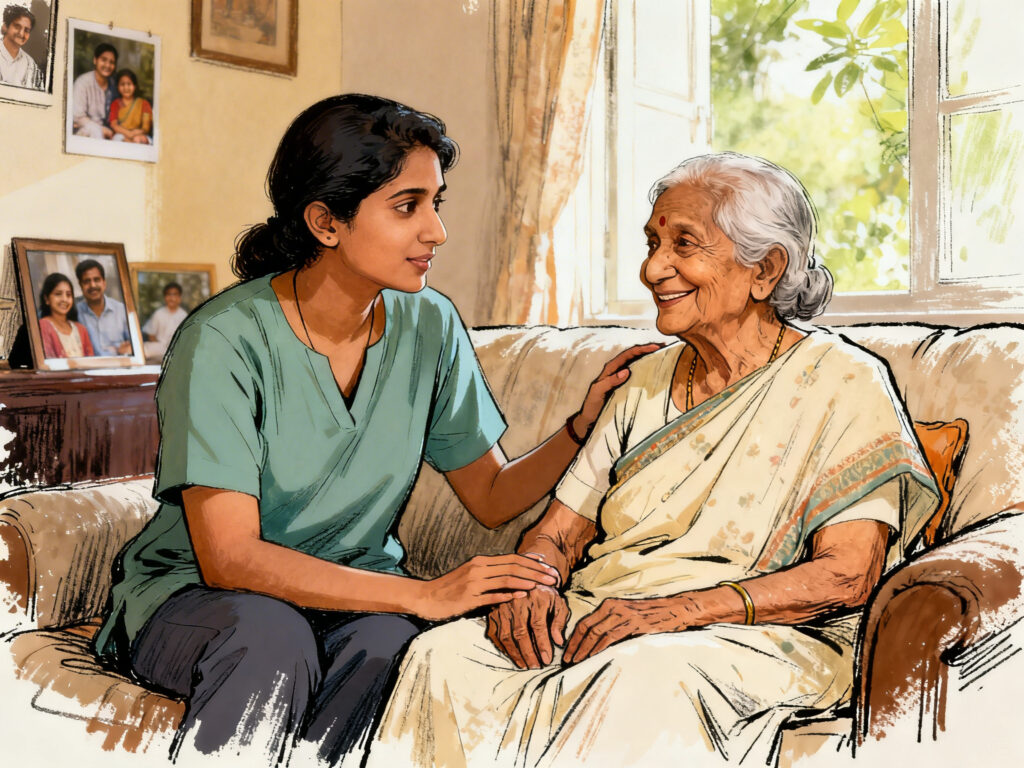
Whether you are a spouse, daughter/daughter-in-law, sibling, friend, or neighbour, your role is important. Dementia can make the world feel confusing and unpredictable. Familiar, calm, and supportive people help restore a sense of safety.
Support can look like:
  • Listening without correcting, arguing, or rushing
  • Offering reassurance instead of repeated reminders
  • Helping with daily routines and simple decisions
  • Responding patiently to repeated questions or stories
  • Staying socially connected, even as abilities change
What this does:
Your presence helps reduce anxiety, builds trust, and creates calmer daily experiences.

Supporting the Caregiver

Because caregivers need care too
Caregivers often carry the heaviest load — physically, emotionally, and mentally. Many feel guilty asking for help or believe they must manage alone. Support from family and friends can make caregiving sustainable rather than overwhelming.
You can help by:
  • Offering practical help (meals, errands, short breaks)
  • Checking in emotionally, not just practically
  • Encouraging rest and self-care without judgement
  • Supporting them to seek counselling or peer support
  • Avoiding criticism or unsolicited advice
Sometimes, simply saying “I’m here — how can I help?” makes a difference.

Quick Check:

Choose Your Response: Communication

Scenario

Your mom says:
“I need to go home. My parents will be worried.”

What Do You Say?

Option A:
Work with professionals to understand current needs, anticipate changes, and outline medical, emotional, and practical support over time.
Option B:
“You already asked that. You’re safe here.”
Option C:
“You’re missing home. Tell me about it.”

Daily Care Stress Reducer

Try This Today (Check All That Apply)

  • Keep routines consistent day to day
  • Offer choices instead of instructions
  • Prepare the environment before care tasks
  • Slow down your pace and your voice
  • Focus on cooperation—not completion

Feedback

Every box you checked is a protective factor against distress—for both of you.

Caregiver Insight:

It’s not about doing more. It’s about doing things differently to meet the unspoken needs of the person with dementia.

When Relationships Change

Adapting with empathy
Dementia may change how a person communicates, remembers, or behaves — but it does not remove their need for respect, affection, or belonging.
Helpful reminders:
  • Behaviour is often communication, not intention
  • Emotional memory lasts longer than factual memory
  • Dignity is preserved through tone, touch, and patience
  • Relationships can remain meaningful, even if different
Connection matters more than correction.
Learn, Support, Stay Connected
Dementia is easier to face when support is shared. Learning together, asking for help, and staying connected strengthens not just the person living with dementia — but everyone around them.

Behaviour is often communication, not intention
Emotional memory lasts longer than factual memory
Relationships can remain meaningful, even if different
Dignity is preserved through tone, touch, and patience