
Safe, compassionate spaces for caregivers and families to connect, share, and feel understood.
A Space to Be Heard—Not Fixed
Caring for someone living with dementia often happens:
- Quietly
- Behind closed doors
- With little understanding from others
- With cultural pressure to “manage” without complaint
Support & Connection events exist to change that.
These are spaces where:
- You don’t have to explain yourself
- You don’t have to be strong
- You don’t have to have solutions
- You’re allowed to speak—or stay silent
You belong here exactly as you are.
What Are Support & Connection Events?
These events focus on emotional support, shared understanding, and human connection—not teaching or training.
They are especially helpful if you feel:
- Overwhelmed or exhausted
- Emotionally alone
- Guilty for feeling tired or resentful
- Grieving changes that others don’t see
- Unsure where you fit anymore
Types of Support & Connection Events
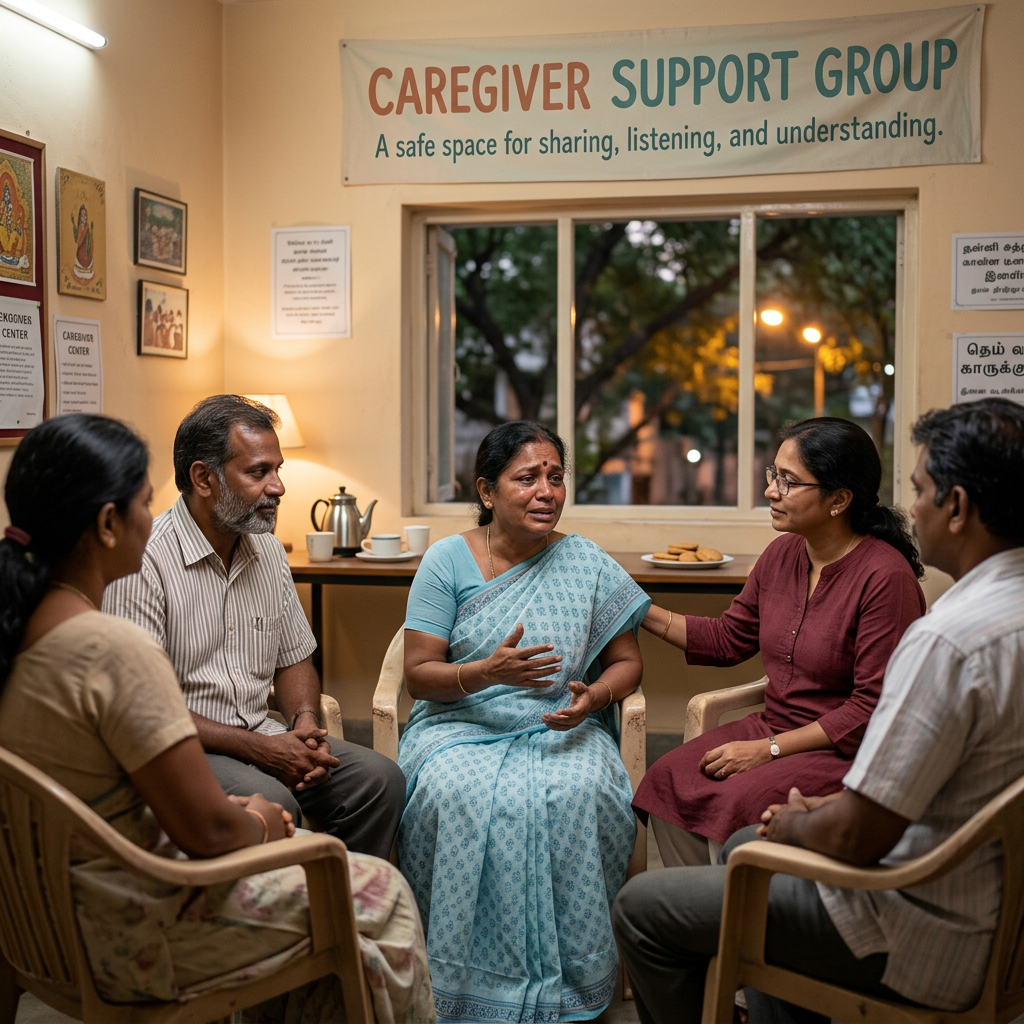
Caregiver Support Groups
Small, facilitated groups where caregivers:
- Share experiences openly
- Listen without judgment
- Feel less alone in their struggles
- No advice unless asked
- No comparison
Just understanding.
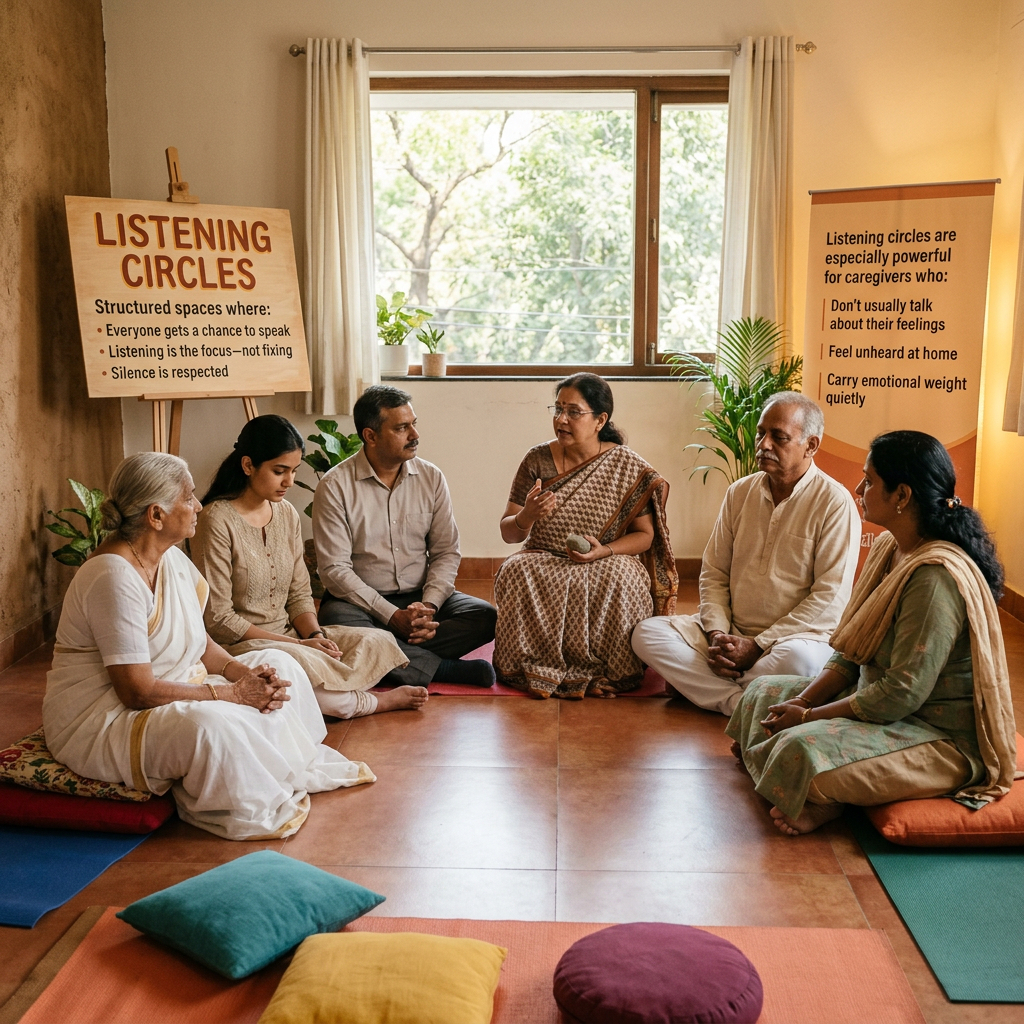
Listening Circles
Structured spaces where:
- Everyone gets a chance to speak
- Listening is the focus—not fixing
- Silence is respected
Listening circles are especially powerful for caregivers who:
- Don’t usually talk about their feelings
- Feel unheard at home
- Carry emotional weight quietly
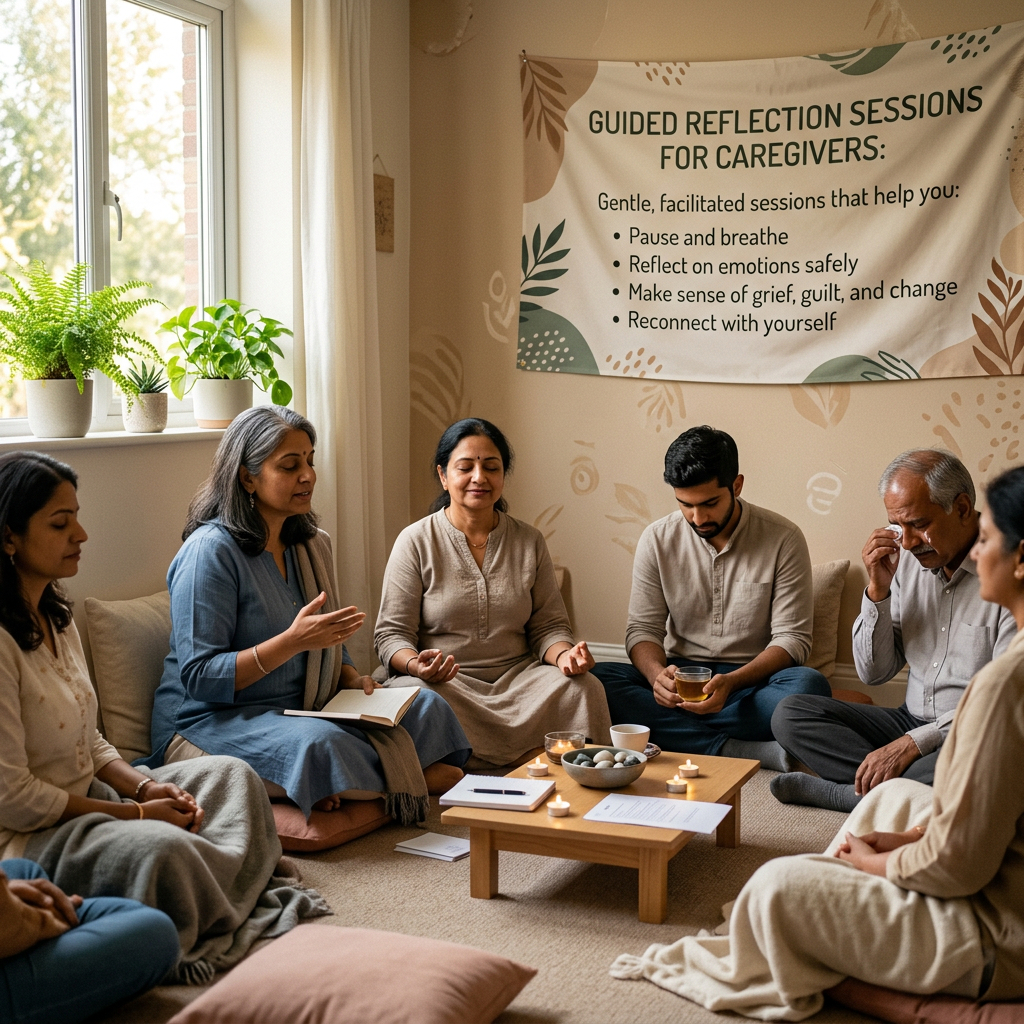
Guided Reflection Sessions
Gentle, facilitated sessions that help caregivers:
- Pause and breathe
- Reflect on emotions safely
- Make sense of grief, guilt, and change
- Reconnect with themselves
These sessions are calm, slow, and grounding.
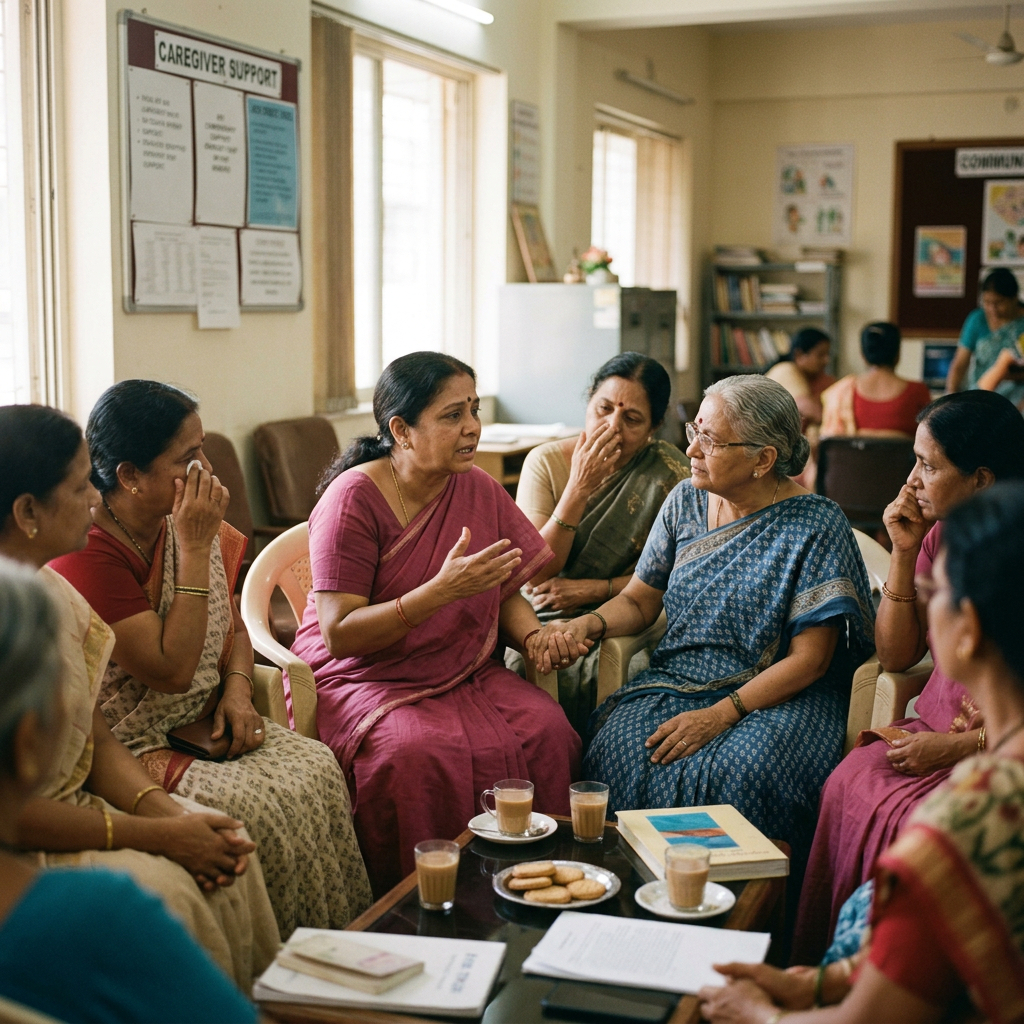
Peer Conversations
Less formal, community-style conversations that allow:
- Honest sharing
- “Me too” moments
- Mutual support
Peer conversations help reduce isolation and stigma—especially in the Indian caregiving context.